Prime Day Is Coming: 5 Proven Strategies to Lower Your Amazon ACOS Before the Biggest Shopping Event of the Year
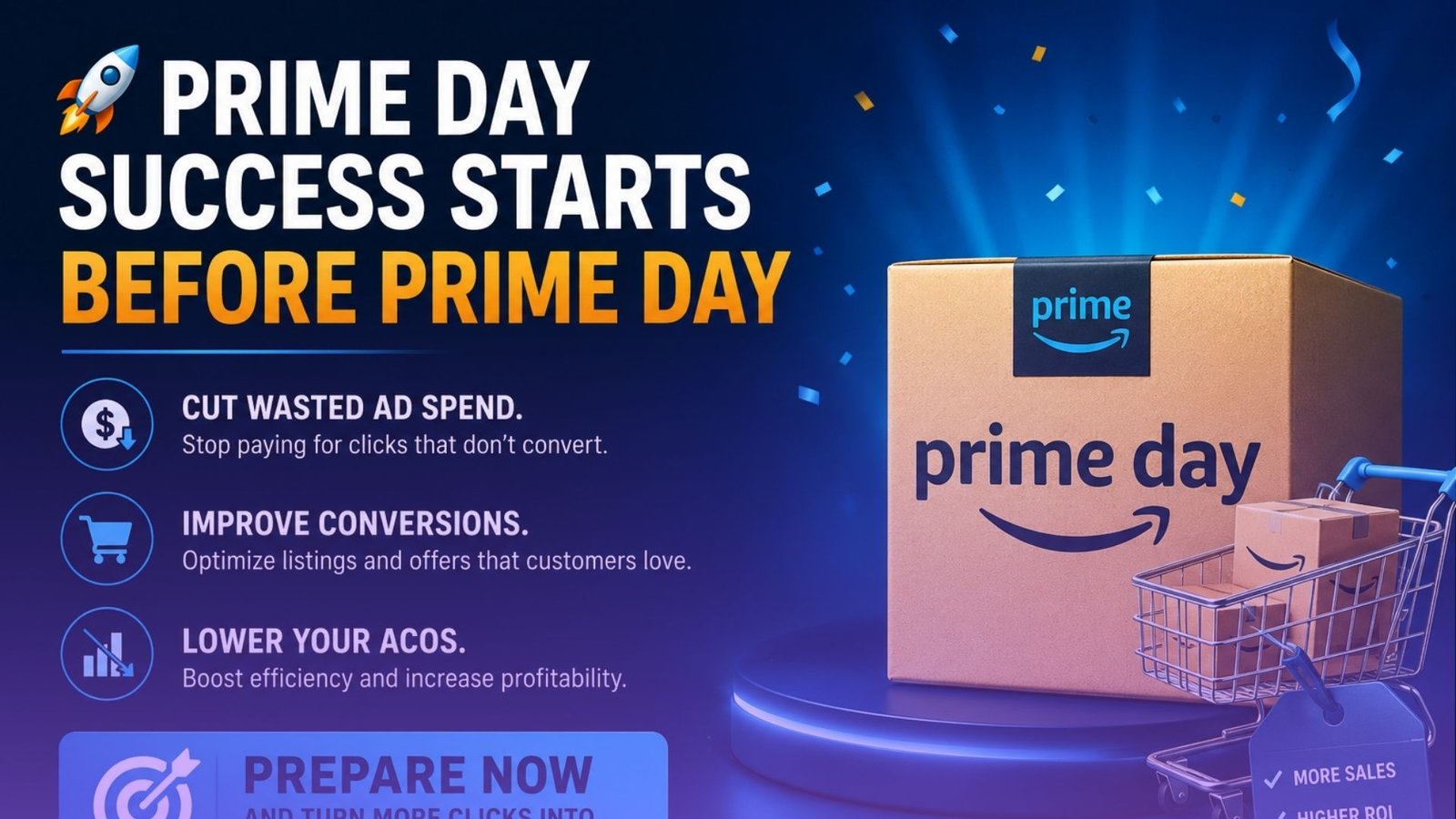
Prime Day is one of the most anticipated shopping events for Amazon sellers worldwide. Every year, millions of shoppers visit Amazon looking for the best deals, creating a massive opportunity for brands to increase sales and expand their customer base. However, with increased traffic comes increased competition. Sellers who fail to prepare their advertising campaigns often experience rising advertising costs and shrinking profit margins.
One of the most important metrics Amazon sellers monitor during Prime Day is Advertising Cost of Sales (ACOS). A lower ACOS means you are spending less on advertising to generate each sale, resulting in higher profitability. The key to Prime Day success is not simply attracting more traffic but converting that traffic efficiently while maintaining healthy profit margins.
In this guide, we’ll explore five proven strategies that can help you reduce your ACOS before Prime Day and position your brand for maximum profitability.
Understanding ACOS and Why It Matters
ACOS (Advertising Cost of Sales) is the percentage of ad spend compared to revenue generated from those ads. For example, if you spend $20 on advertising and generate $100 in sales, your ACOS is 20%.
A lower ACOS generally indicates a more efficient advertising campaign. While the ideal ACOS varies by product category and profit margins, every Amazon seller should aim to improve campaign efficiency before major shopping events such as Prime Day.
With competition intensifying during Prime Day, even small improvements in ACOS can lead to substantial increases in profitability.
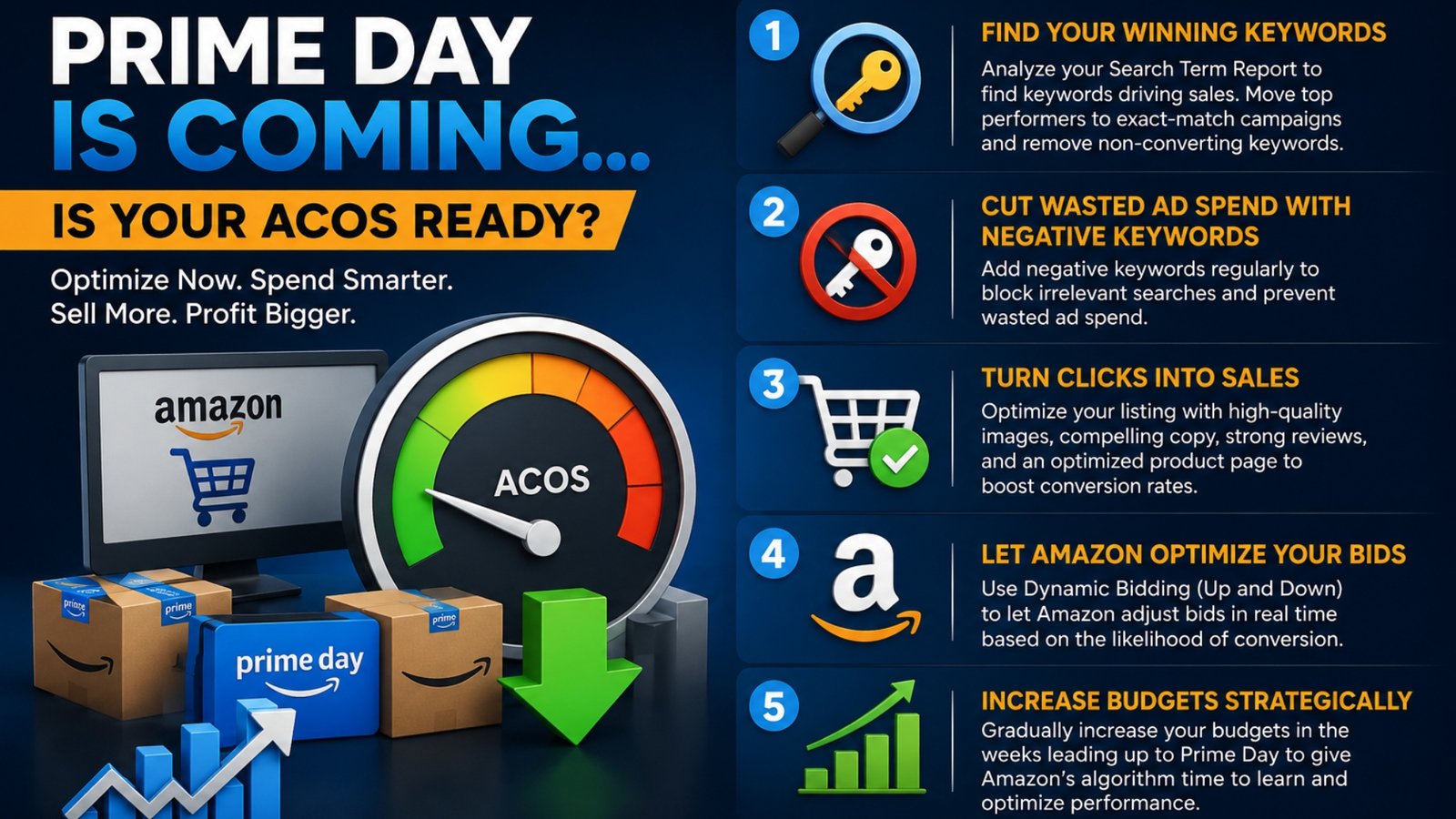
1. Identify and Scale Your Best-Performing Keywords
The foundation of every successful Amazon PPC campaign is keyword optimization. Before Prime Day arrives, review your Search Term Reports to identify keywords that consistently generate conversions and sales.
Once you’ve identified your winning keywords, move them into dedicated Exact Match campaigns. This allows you to control bids more effectively and allocate more budget to high-converting search terms.
At the same time, analyze keywords that generate clicks but fail to convert. These keywords can quickly drain your advertising budget during Prime Day when competition and CPCs are higher than usual.
Key Actions:
- Review Search Term Reports regularly.
- Identify high-converting keywords.
- Create Exact Match campaigns for top performers.
- Remove or reduce bids on underperforming keywords.
- Continuously monitor keyword performance.
2. Reduce Wasted Spend with Negative Keywords
Many sellers focus heavily on finding new keywords but overlook the importance of negative keywords. Negative keywords prevent your ads from appearing for irrelevant searches, helping you eliminate wasted ad spend.
For example, if you’re selling premium products, you may want to exclude search terms containing words such as “cheap” or “free” if they consistently fail to convert.
Implementing a strong negative keyword strategy can dramatically improve campaign efficiency and lower ACOS, especially during high-traffic events when irrelevant clicks become more expensive.
Benefits of Negative Keywords:
- Reduced wasted ad spend.
- Improved click-through rates.
- Better campaign relevance.
- Increased return on ad spend (ROAS).
- Lower overall ACOS.
3. Improve Your Listing Conversion Rate
Even the most optimized advertising campaign will struggle if your product listing fails to convert visitors into customers.
Prime Day shoppers compare multiple products before making purchasing decisions. Your listing should clearly communicate value and build trust instantly.
Focus on improving key listing elements such as:
High-Quality Images
Professional product images significantly impact buying decisions. Include lifestyle images, infographics, and clear product demonstrations.
Optimized Product Titles
Ensure your titles include relevant keywords while remaining easy to read.
Compelling Bullet Points
Highlight your product’s unique benefits rather than simply listing features.
Enhanced Brand Content
Use A+ Content to provide additional information and improve customer confidence.
Customer Reviews
Actively work on increasing positive reviews and addressing customer concerns.
A higher conversion rate means Amazon rewards your products with better performance, resulting in lower ACOS and improved campaign profitability.
4. Leverage Amazon Dynamic Bidding
Amazon’s Dynamic Bidding feature allows the platform to adjust bids automatically based on the likelihood of a conversion.
The “Up and Down” bidding strategy can be particularly effective during Prime Day because Amazon uses real-time shopper behavior signals to optimize bid adjustments.
Instead of manually increasing bids across all keywords, Dynamic Bidding helps focus your budget where conversions are most likely to occur.
Advantages of Dynamic Bidding:
- Smarter bid adjustments.
- Improved conversion efficiency.
- Better use of advertising budgets.
- Increased competitiveness during peak traffic periods.
- Reduced manual campaign management.
Before Prime Day, test Dynamic Bidding strategies and monitor performance to determine which approach works best for your products.
5. Increase Advertising Budgets Gradually
A common mistake sellers make is waiting until Prime Day to significantly increase advertising budgets. Sudden budget changes can disrupt campaign performance and limit Amazon’s ability to optimize effectively.
Instead, gradually increase budgets in the weeks leading up to Prime Day. This allows Amazon’s algorithm to gather data, learn customer behavior patterns, and optimize campaign delivery.
By scaling budgets strategically, you create a stronger foundation for success when Prime Day traffic reaches its peak.
Budget Scaling Tips:
- Increase budgets incrementally.
- Monitor performance daily.
- Prioritize high-converting campaigns.
- Allocate more spend to proven keywords.
- Avoid drastic changes close to Prime Day.
Additional Prime Day Preparation Tips
Beyond PPC optimization, sellers should also focus on overall account readiness.
Inventory Management
Ensure sufficient inventory is available to meet increased demand and avoid stockouts.
Pricing Strategy
Evaluate competitors and prepare attractive Prime Day promotions.
Deal Planning
Consider Lightning Deals, Coupons, and Prime Exclusive Discounts.
Customer Experience
Maintain strong seller metrics and respond promptly to customer inquiries.
Final Thoughts
Prime Day represents one of the biggest revenue opportunities of the year for Amazon sellers. However, success requires preparation, optimization, and strategic execution.
By identifying winning keywords, implementing negative keywords, improving listing conversions, leveraging Dynamic Bidding, and gradually increasing budgets, sellers can significantly lower ACOS while maximizing profitability.
Remember, Prime Day success isn’t simply about generating more traffic. It’s about turning that traffic into profitable sales. The sellers who start optimizing today will be in the strongest position to capitalize on the massive surge in customer demand when Prime Day arrives.
Start preparing now, reduce your ACOS, and set your Amazon business up for a highly profitable Prime Day.